Every walking pad I could buy was wrong in one of two ways.
The cheap ones are loud, draw power all day and are landfill in a year or two. The good manual ones are gym sized and cost thousands. I wanted one designed for a real home, so I built it.

The only options were: loud and disposable, or huge and expensive.
The cheap under desk treadmills win on the on price and lose on everything after it, noise, power, and a motor built to fail. The premium manual ones get the idea right, then arrive the size of gym equipment and priced to match.
There was nothing quiet, manual, small enough for an apartment and honestly priced. That gap is the whole reason office walker exists.
Buy a cheap electric one if
- You want the lowest price on the shelf today.
- You are fine replacing it in a year or two.
- You want a motor to set and hold your pace for you.
Buy this one if
- You want it quiet on calls and at night.
- You want to still own it in a decade.
- You would rather replace a part than the whole thing.
All three are walking pads. Almost nothing else about them is the same, so here is every difference that matters.
Manual against electric walking pads, line by line
A cheap pad is not cheap if you buy it three times.
The sticker price is the easy number to compare, which is why every listing leads with it. The number that decides what you actually spend is how many years it lasts before the motor goes and takes the sealed unit with it. and don't forget the electric cost of it as well
Mine is built the other way. Every wearing part can be ordered on its own and shipped to you, and most swaps take about 10 minutes. That is one purchase instead of a many.
The noise difference you actually hear
Measured at one meter, 1.8 m height, in a 22 square meter room with a wooden floor and the windows shut.
68 against 45 is not a small gap. It decides whether you use it.
Decibels are logarithmic, so those figures understate what your ear does with them. An electric pad at 68 dB sits above two people talking, which is why it competes with your call, your television, and whoever is asleep next room.
At 33-45 dB office walker sits between a whisper and a conversation. That is why it still gets used at nine in the evening in an apartment with thin floors, and why a louder one slowly stops getting used at all.
An electric pad is the right call for some people
Calculate the cost per year, not the cost on the shelf.
Office Walker: starting from €1,149 (excl. fees).
A cheap pad that lasts two years and cannot be repaired is a purchase you make again, and then again. The sticker price only looks like the whole cost until the first motor goes.
Office Walker is built so the math works the other way. Every part is on the shelf, the deck opens with two bolts, and a worn part is an order rather than a trip to the junk yard. It costs more once and less every use after that.
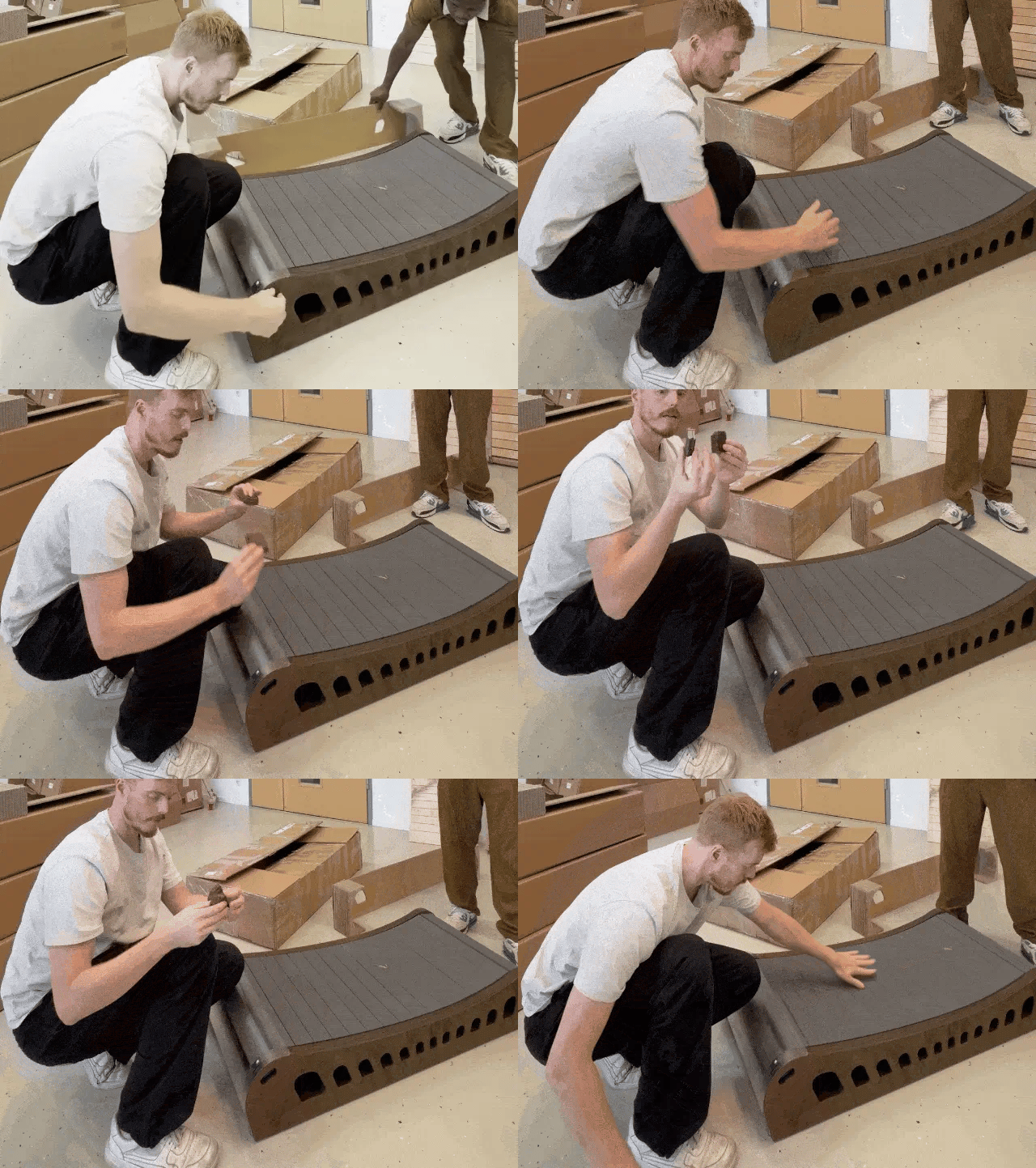
Open two bolts, then fix or mod it
Everything that wears is reachable without a workshop or a professional. The tools you need are already in your home, and every repair has a written and video guide. The motorized walking pads give you none of that, cheap and expensive both, because none of them were meant to be opened or repaired, planned obsolescence.
I am working through the rest of the category, one honest comparison at a time.
This page covers the two shapes the market actually sells: the cheap electric one, and the large manual one built for a gym. before making my own walking pad, I bought 5 different electric ones and 2 of the best manual ones, I like to share my honest opinion on how they stack up against the Office Walker
I am writing them now and will link from here as they ready. If there is one you want to see first, the fastest way to join our discord ask me or the community directly.
Manual against electric, answered
It works the other way around. Nothing sets a pace for you: push off and the belt follows, stop and it stops. It feels odd for a day or two, then you stop thinking about it.
For light, occasional use a cheap pad can be fine, and I would tell you that. The motor is the part that fails, and when it does the sealed unit goes with it. Mine costs more up front and less over its life.
It is what most people search for, but the manual kind. No motor, so it is quiet, draws nothing and lasts. I call it a walking pad.
It is built for walking while you work and it is too short for proper running. Think of it as movement for the hours you would otherwise spend sitting.
The one you can open. Every part of this swaps out in about 10 minutes, and we ship you any part you need. A sealed pad is finished when its motor is.
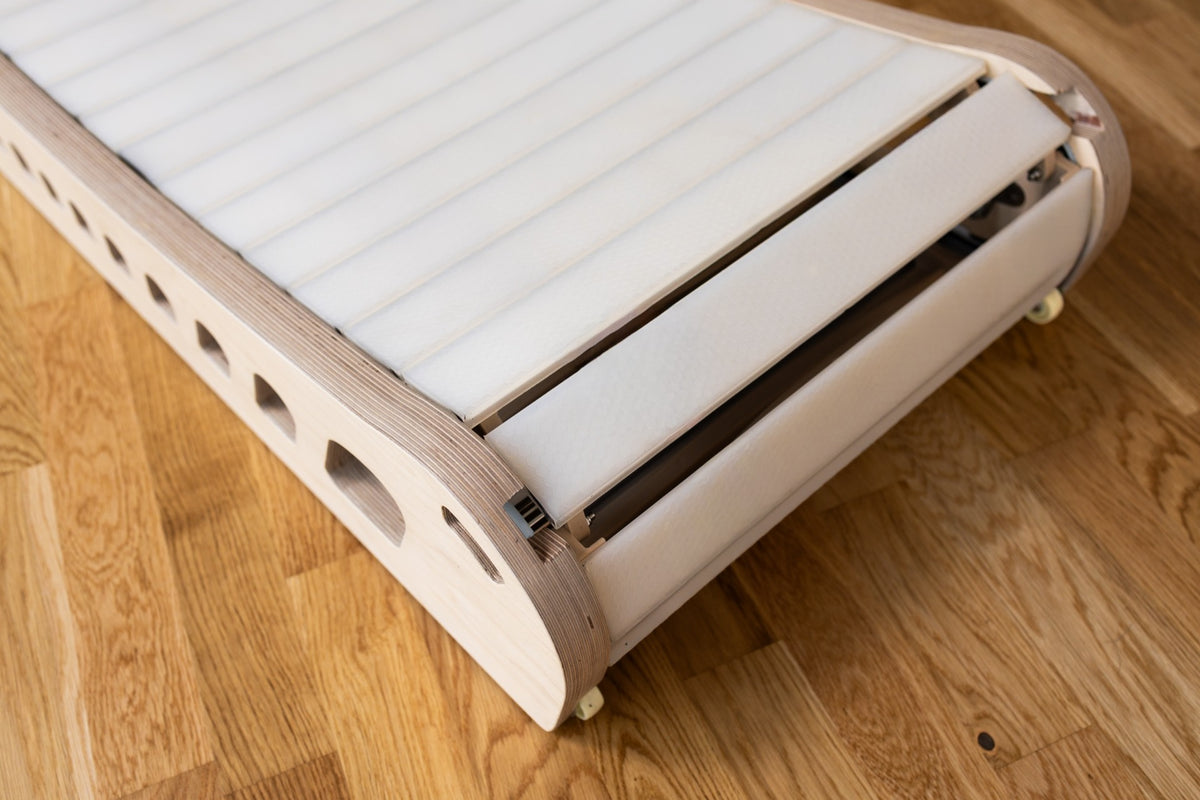
Get your name down for one.
Backers get theirs first. After that the waitlist orders, below the price the store will charge once it opens to everyone. Tens of thousands of people are already on it, so it is worth putting your name down now.