Nobody solves the hard ones sitting perfectly still.
You already get up and pace when you are stuck. Office Walker puts that under the desk, so you can do it without walking away from the problem.
See how many calories you burn in a day
Set your weight, the hours you would walk, and a gentle pace. These are honest estimates and the assumptions are shown underneath.
You cannot concentrate with a machine asking you for input.
A pad you set a speed on interrupts you every few minutes. You notice the pace, you adjust it, you lose the thread. A manual walker that just follows your feet asks you for nothing, so the work stays where you left it.
Walk when the thinking is hard, stand when it is not. It doesn't ask for your attention or input, and doesn't break your focus sesh, that is why it still gets used on the days that actually matter.
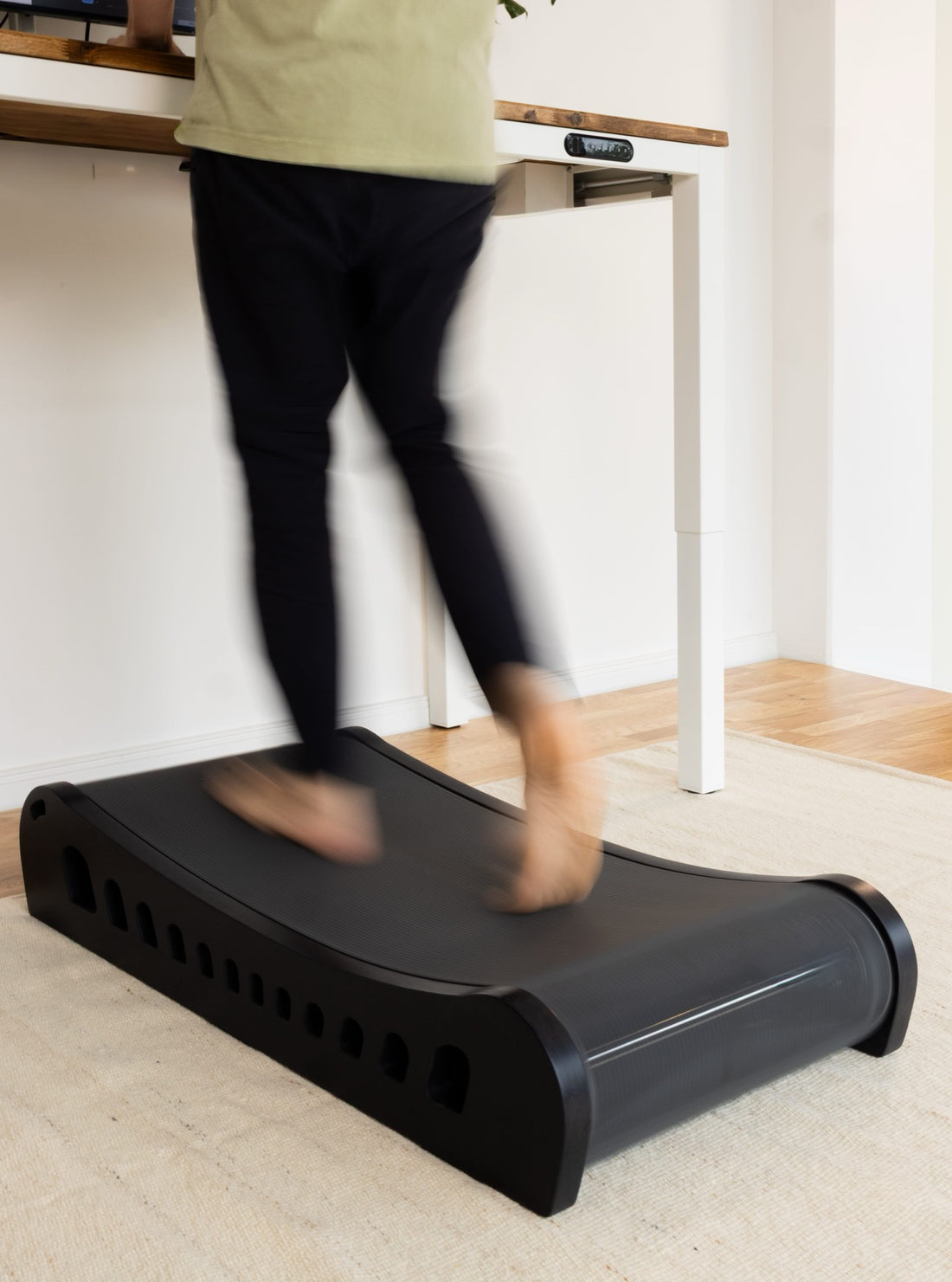
Slow enough to think on, quiet enough to forget about.
A motor has a minimum speed and a mind of its own. Here the deck follows your feet, so the pace never asks you to make a decision and your attention stays where you put it.
How does a slow walk clear a stuck problem?
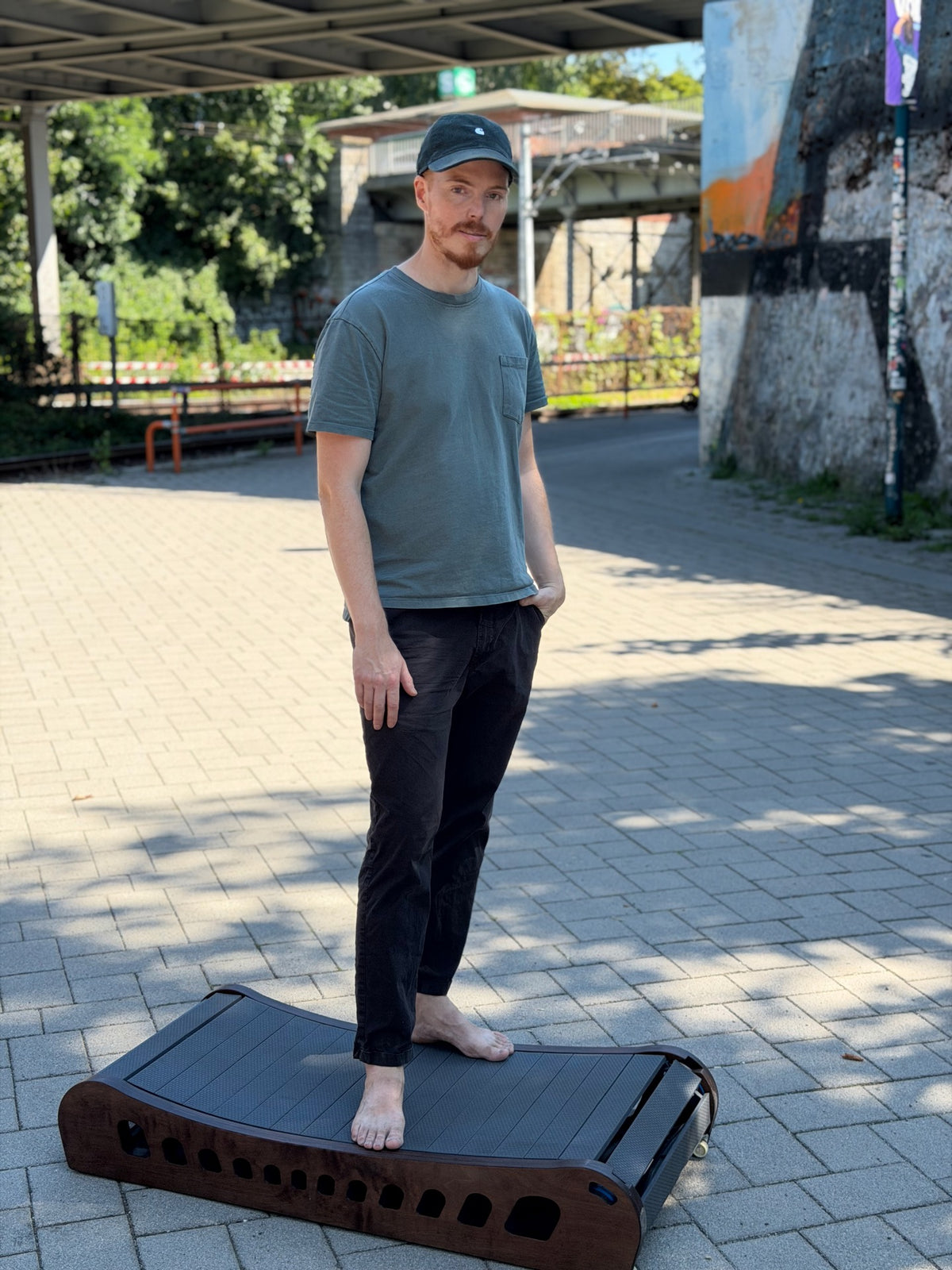
You start walking
The body takes over the rhythm and the fidgety part of your head goes quiet.
The problem loosens
With nothing to manage, your attention stays on the work instead of the machine.
You stop, mid step
The belt stops when you do. No speed to wind down, no thread dropped.
Does walking while you work help you concentrate?
It is why you get up and walk around when you are stuck. Gentle, rhythmic movement occupies just enough of the body to quiet the part of your mind that fidgets, and leaves the rest free to work.
A motorized pace fights that, because it keeps demanding your attention. A manual one gives it back, because the belt simply follows you. The walk becomes part of the thinking instead of an interruption to it.


The hours you are not thinking hard are the hours worth walking.
Deep work is a small part of most days. The rest is email, reading, the meeting you are half in, and the admin nobody schedules. Those are the hours this quietly absorbs, because none of them need your feet.
That is why the pace matters less than the fact that stopping costs you nothing. You walk the shallow hours, plant for the hard ones, and the step count arrives without you deciding to exercise.
Almost nobody has their best idea sitting perfectly still.
Think about where the answer usually turns up. In the shower, on the walk to the station, halfway to the kitchen. Rarely in the chair, staring at the thing that is stuck.
Movement occupies the restless part of your head and leaves the rest free to work, which is why people pace without being told to. Putting that under the desk means you stop having to leave the problem in order to solve it.
Focus questions, answered
The opposite is what I designed for. There is no speed to set or manage, so nothing asks for your attention. Push off and the belt follows, and the work stays in front of you.
Yes. The belt stops the same moment your feet do. There is no button to find and no speed to wind down.
In daily use it runs at 33 to 45 dB. A whisper is around 30 dB and normal conversation around 60 dB, so it sits just above a whisper. Nobody two desks away will care.
Yes, by stopping. It only moves when you do, so you stand still for the fiddly parts and start again without touching anything.
The Office Walker is ideal for that: you can go and stop at will for deep thinking.
A backer, on the Office Walker Discord
Where next. Focus and productivity, working from home, busy parents, gaming.
Get your name down for one.
Backers get theirs first. After that the waitlist orders, below the price the store will charge once it opens to everyone. Tens of thousands of people are already on it, so it is worth putting your name down now.